Marketing Funnel AIDA Model: The 4- Step Strategy to Boost Conversions
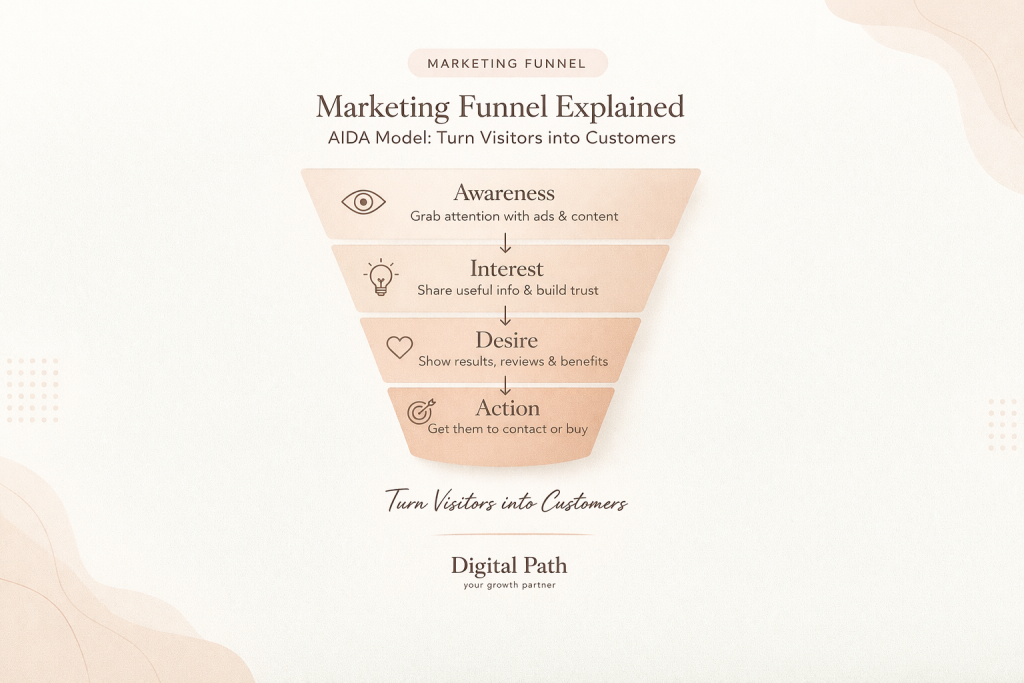
Marketing funnel AIDA model is one of the most powerful frameworks businesses use to guide potential customers from discovering a brand to making a purchase. Whether you’re running a startup or a digital marketing agency, understanding this model can dramatically improve your conversion rate.
In today’s competitive digital world, simply attracting visitors isn’t enough—you need a structured funnel that turns attention into action. That’s where the AIDA model comes in.
If you’re new to digital marketing, check out our guide on how digital marketing helps businesses grow online.
Table of Contents
What is a Marketing Funnel?
A marketing funnel is a step-by-step journey that a customer goes through before making a purchase. It starts from awareness and ends with conversion.
Think of it like a funnel:
- Wide at the top → Many people discover your brand
- Narrow at the bottom → Only a few convert into customers
The Marketing Funnel AIDA model simplifies this journey into four clear stages.
The 4 Stages of the AIDA Marketing Funnel
1. Awareness (Attract Attention)
This is the first stage where potential customers become aware of your brand.
Goal:
Grab attention and introduce your business.
Strategies:
- SEO-optimized blog posts
- Social media marketing
- Paid ads (Google Ads, Facebook Ads)
- YouTube videos
External resource to understand SEO better: Here
Example:
A user searches “best digital marketing services” and finds your blog.
At this stage, focus on visibility—not selling.
2. Interest (Build Engagement)
Once people know about you, the next step is to keep them interested.
Goal:
Educate and engage your audience.
Strategies:
- Valuable blog content
- Email newsletters
- Free guides or eBooks
- Engaging social media content
Example:
The user reads your blog and subscribes to your email list.
Provide useful information that solves their problems.
3. Desire (Create Want)
Now you turn interest into desire by showing why your product or service is the best choice.
Goal:
Build trust and emotional connection.
Strategies:
- Testimonials and reviews
- Case studies
- Product benefits
- Before/after results
Example:
The user sees a success story of how your service helped another business grow.
Highlight value and results.
4. Action (Drive Conversion)
This is the final stage where the user takes action.
Goal:
Convert leads into customers.
Strategies:
- Strong call-to-action (CTA)
- Limited-time offers
- Easy checkout process
- Contact forms or booking options
Example:
The user clicks “Hire Us” or “Get Started” and becomes your client.
Make it easy and compelling to take action.
Why the AIDA Model is Important
Using the AIDA funnel helps you:
- Understand customer behavior
- Improve conversion rates
- Create targeted marketing strategies
- Increase ROI from marketing efforts
Without a funnel, you risk losing potential customers at every stage.
Simple Example of AIDA Funnel in Action
Let’s say you run a digital marketing agency:
- Awareness: You post a blog on SEO tips
- Interest: Visitors read and subscribe
- Desire: You share case studies and results
- Action: They contact you for services
Tips to Optimize Your AIDA Funnel
- Use clear and compelling headlines
- Focus on customer pain points
- Add strong CTAs in every stage
- Use visuals and storytelling
- Track performance with analytics tools
Conclusion
The marketing funnel AIDA model is a proven strategy that helps businesses turn strangers into loyal customers. By guiding your audience through Awareness, Interest, Desire, and Action, you can create a powerful marketing system that consistently drives results.
Want to grow your business with a high-converting marketing funnel?
Contact us today and let’s build your strategy!